



Houston HOA & Community Fencing
The fence along your entrance and greenbelts is the first thing residents and homebuyers see — and the one thing every board gets judged on. Mustang Fencing & Gates gives your community a single, documented fence standard for perimeter, monuments, and amenities that still looks uniform years after phase one goes in.
Drive into a well-run Houston subdivision and you feel it before you can name it: the entrance monument, the greenbelt fence, and the amenity area all speak the same visual language. Drive into a struggling one and you see the opposite — three shades of black, four post styles, and mismatched heights strung along one loop road. That gap is rarely about a single bad fence; it is about whether the community ever adopted one standard and held to it. Mustang Fencing & Gates installs community-wide fencing for HOAs, master-planned developments, and association-managed neighborhoods across Greater Houston, under our broader commercial fencing program — and our entire approach is built to give your board that one standard, in writing, so every phase, entrance, and amenity matches.
One Community, One Standard — In Writing
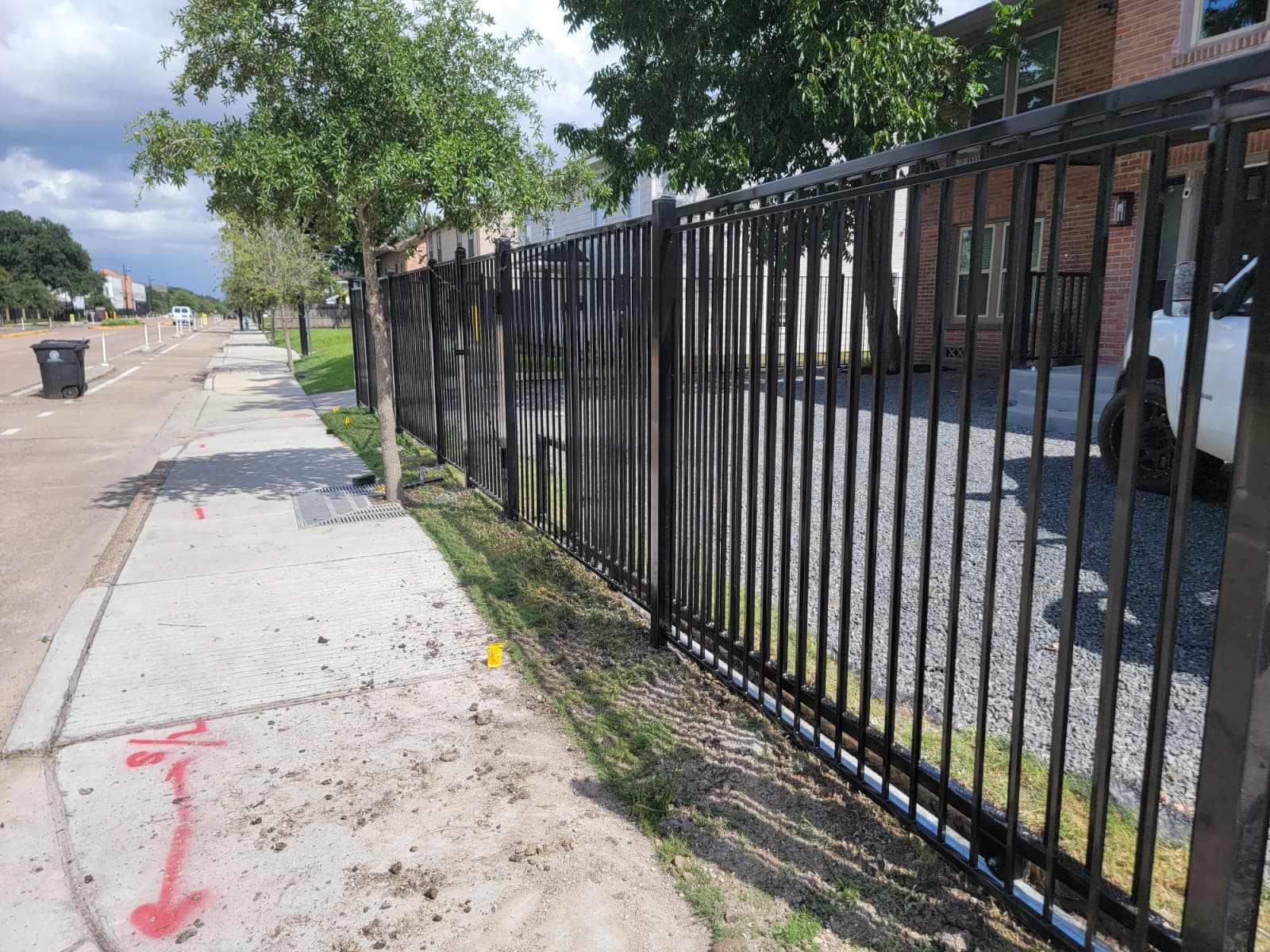
The most common HOA fence complaint isn’t the fence that fell over; it’s the fence that doesn’t match. We solve that at the root by documenting a single, board-approved specification your architectural control committee can adopt as the official community standard and hold every future phase to. For the signature ornamental look most Houston communities choose, we build with powder-coated commercial ornamental steel that keeps its color instead of fading and rusting into a neglected look.
- One written specification. Material, gauge, height, color, post spacing, and finish documented on a single spec sheet your board and ACC adopt as the community standard.
- Consistent across every phase. Because the standard is on file, a section installed three years later matches phase one — same profile, same powder-coat color, same detailing.
- Matched to your deed restrictions. We align the physical fence to the language in your CCRs and ACC guidelines, so what gets built is defensible if a homeowner ever challenges it.
- Sightline-consistent runs. Uniform height and spacing along collector streets and greenbelts protect property values and quiet the complaints that come from a patched-together look.
- A benchmark that outlives the board. Volunteer boards turn over; the documented standard stays, so future directors and even homeowner installs can be held to the same benchmark.
Where We Fence Across Your Community
A community project usually touches every shared edge at once — the perimeter residents see from the street, the entrances that make the first impression, and the amenities that carry the most liability. We scope all of them under the one standard, so nothing reads as an afterthought.
Subdivision Perimeter & Greenbelt
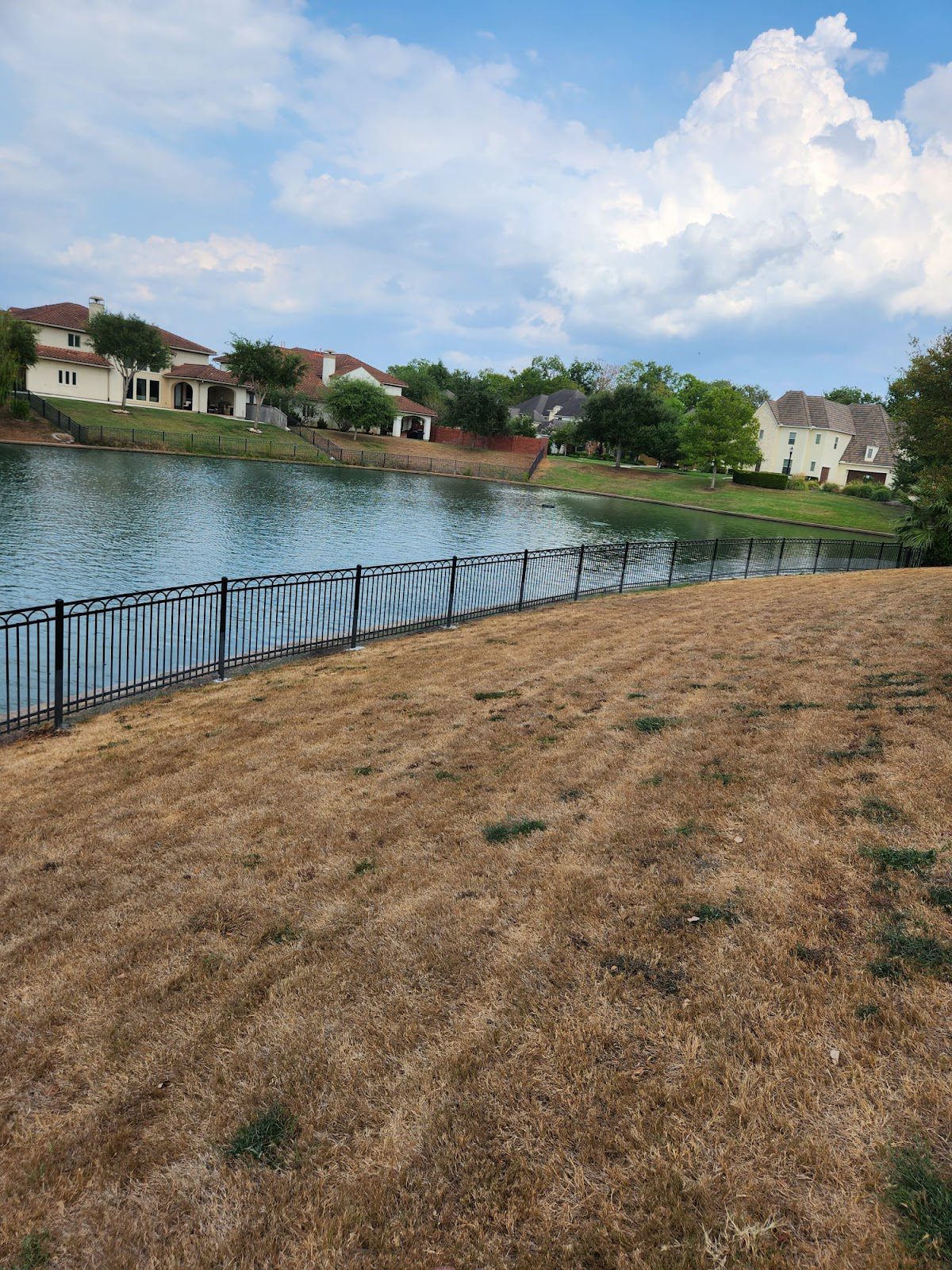
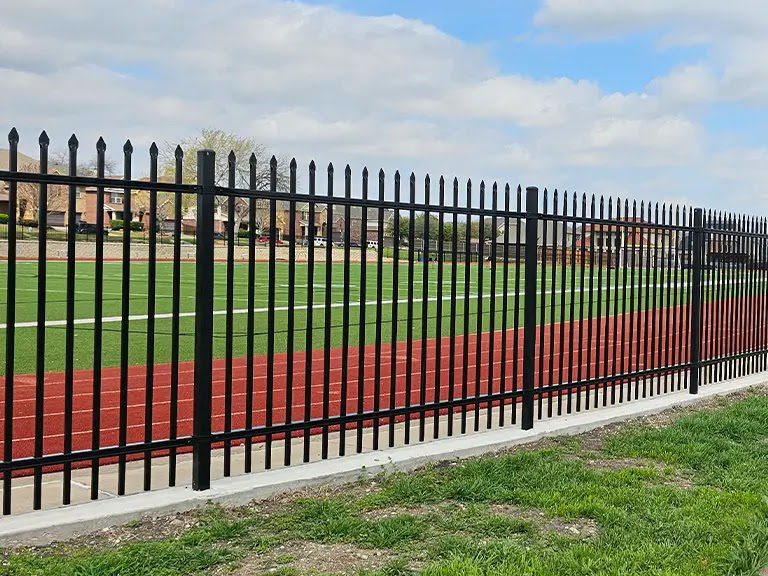
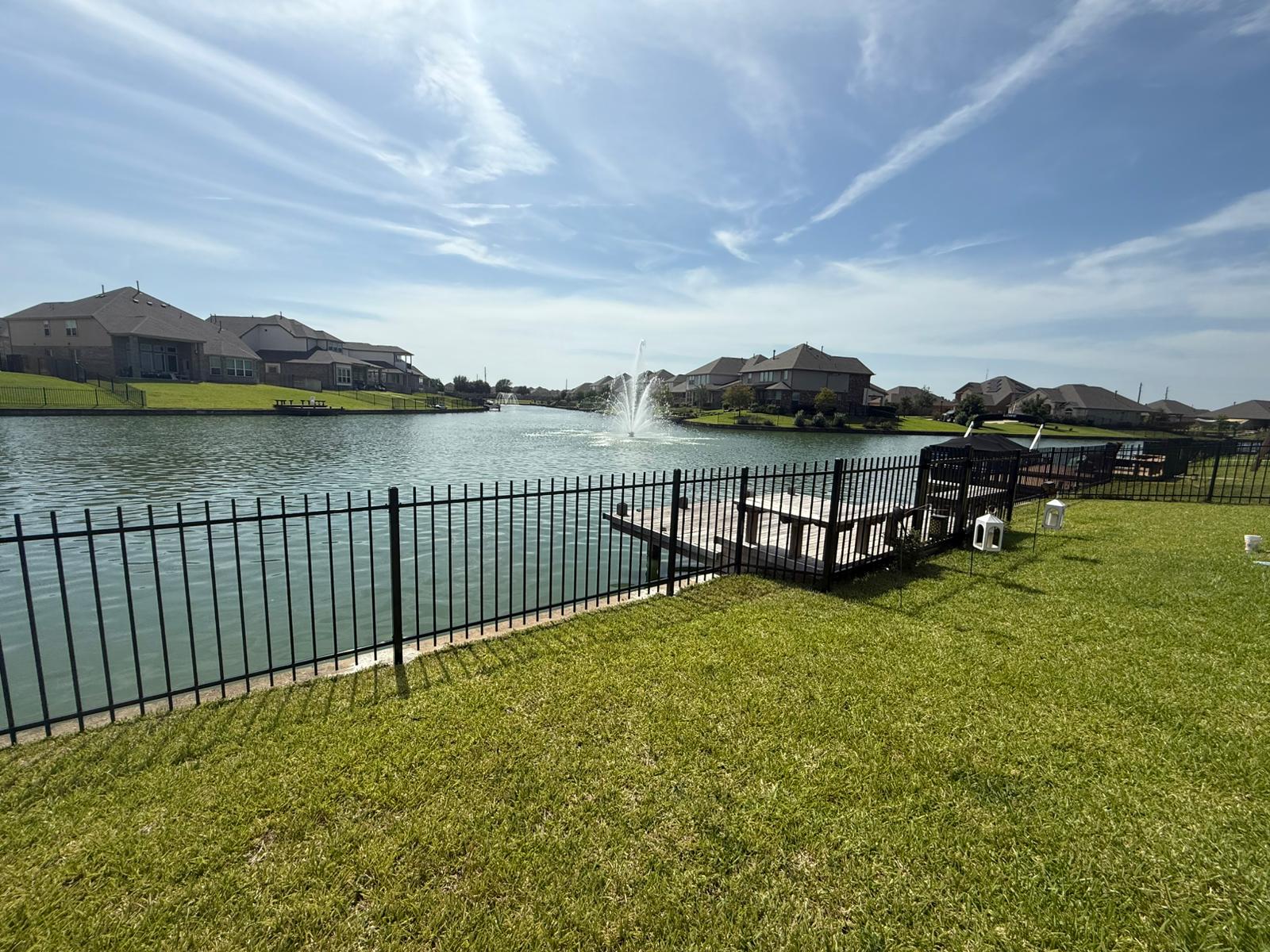
Continuous ornamental steel or screened fence along the community boundary, greenbelts, and detention areas — engineered for consistent post spacing, height, and color across long, uninterrupted runs.
Entrances & Monument Fencing
Wing panels and decorative sections that flank the entry monument and stone columns, framing the community name sign and setting the architectural tone your ACC guidelines are built around.
Amenity & Pool-Area Perimeter
Fencing that defines the clubhouse, pool deck, and event lawn as resident-only space. Pool-barrier code specifics live on our apartment fencing page; here we focus on the amenity perimeter and access.
Access-Controlled Community Gates
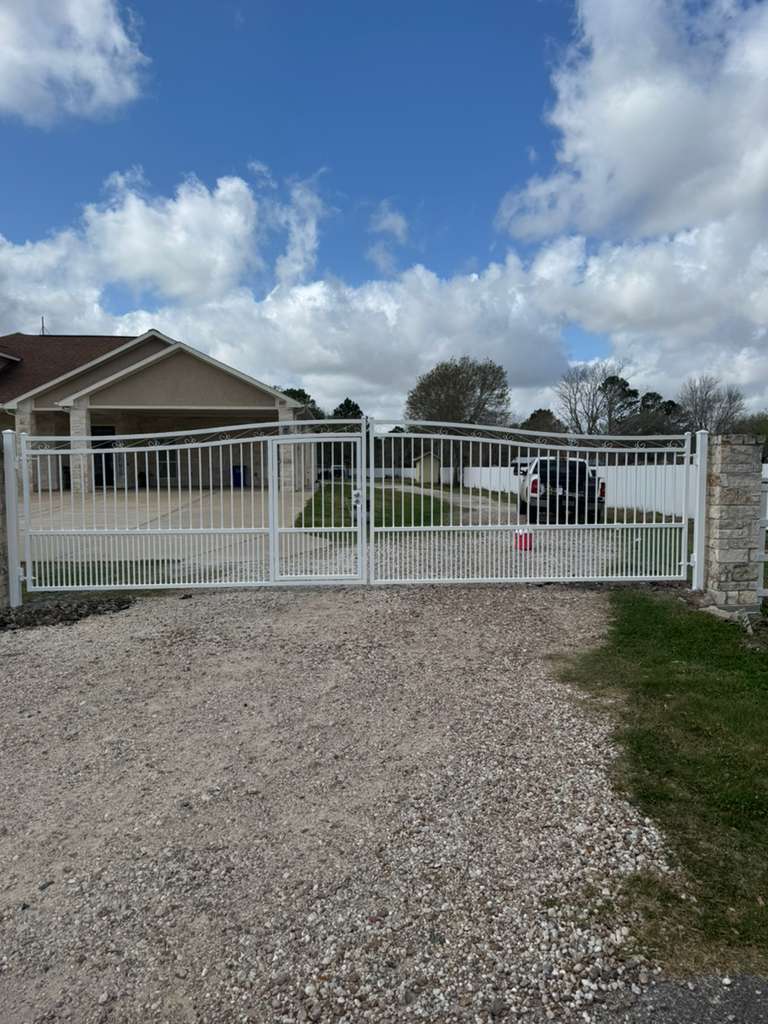
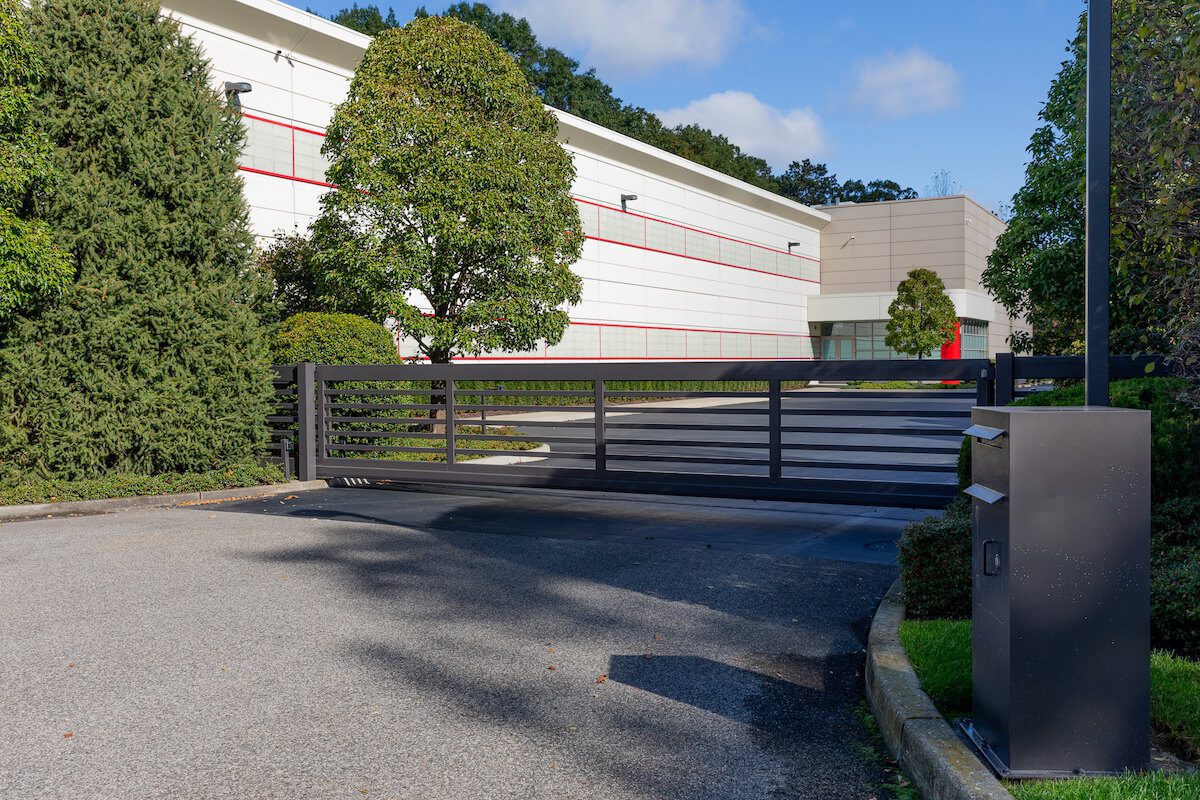
Entrance and amenity gates with commercial-grade operators and keypad, card, or app-based access control for gated sections and resident-only amenities, integrated with your management workflow.
Playground & Dog-Park Enclosures
Child- and pet-safe enclosures with self-closing, self-latching gates that reduce the board’s liability exposure around the busiest amenities in the community.
Standard Replacement & Screening
Phased replacement of aging, individually-installed fencing plus clean screening at detention ponds and utility easements, so the community converges on one look instead of a patchwork.
Planning a perimeter refresh or a full replacement for your board’s next meeting? We’ll walk the community and put a documented standard on paper.
Choosing Your Community Fence Standard
Most communities settle on one signature material for the visible perimeter and entrances, then use a coordinated, lower-cost material for functional runs like detention and sport courts. Here is how the options we install for Houston communities compare — using relative cost tiers, because every community is bid on its own footage and conditions.
| Fence Standard | Curb Appeal | Upkeep | Best Community Use | Relative Cost |
|---|---|---|---|---|
| Powder-Coated Ornamental Steel | Highest | Low | Signature perimeter, entrances, monuments | $$$ |
| Ornamental Aluminum | High | Very low (rust-free) | Amenity perimeter, budget-conscious frontage | $$ |
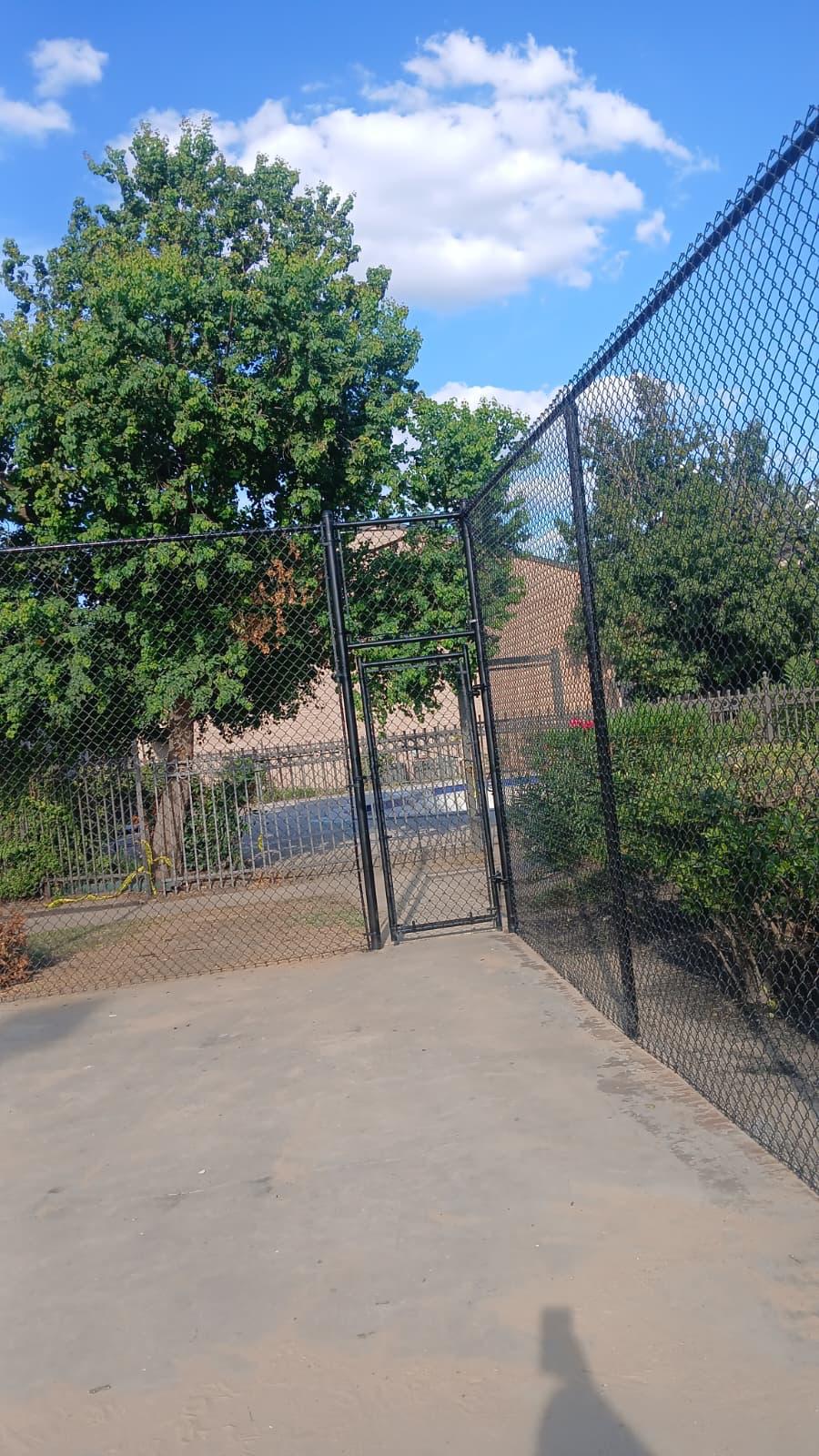
| Color-Coated / Screened Chain Link | Moderate | Low | Detention, greenbelt backs, boundary screening | $ |
| Welded / Ornamental-Mesh Panels | Moderate–High | Low | Sport courts, dog parks, higher-containment areas | $$ |
What a Community Fence Investment Looks Like
Community fencing is almost always a reserve item, and few associations fund a full perimeter in a single year. We break large projects into logical phases — by street, section, or amenity — so each phase fits one reserve cycle and the board can avoid a homeowner-facing special assessment. The bars below rank the community materials against one another per linear foot to help you budget. They are a general estimate, not a quote.
Built to Survive a Board Vote and ACC Review
Community fencing has to clear a board vote, an ACC review, and sometimes a homeowner meeting. Our process is built to hand you the documentation each of those steps needs.
- 1. Community walk & condition map. We walk the perimeter, entrances, and amenities with a board member or your manager, photograph problem areas, and map what needs replacement versus what can wait.
- 2. Written standard & zoned proposal. You receive a documented specification and an itemized, zone-by-zone proposal — the kind of package a board can attach to a motion and an ACC can review.
- 3. Deed-restriction & ACC alignment. We cross-check the proposed height, material, and setback against your CCRs and architectural guidelines and flag anything that may need a variance.
- 4. Phasing that fits your reserves. We sequence the work by visibility and condition — entrances and failing runs first — so the project stays inside routine reserve contributions.
- 5. Scheduled install with resident notice. We coordinate staging and homeowner notification so work along resident lots and amenities stays predictable and low-disruption.
- 6. Standard on file for the future. You keep the approved spec, so future phases are held to the same benchmark long after installation.
The Reference Check Every Board Runs
Before a fence contractor gets a line item in the budget, somebody on the board looks them up. Save that director the search: Mustang Fencing & Gates has 650+ reviews on Google, 250+ on Thumbtack, 150+ on Angi, and 100+ on Facebook from homeowners, managers, and commercial clients across Greater Houston. Read what other communities say about working with us, then bring it to the meeting.
Recent Commercial Work Across Greater Houston
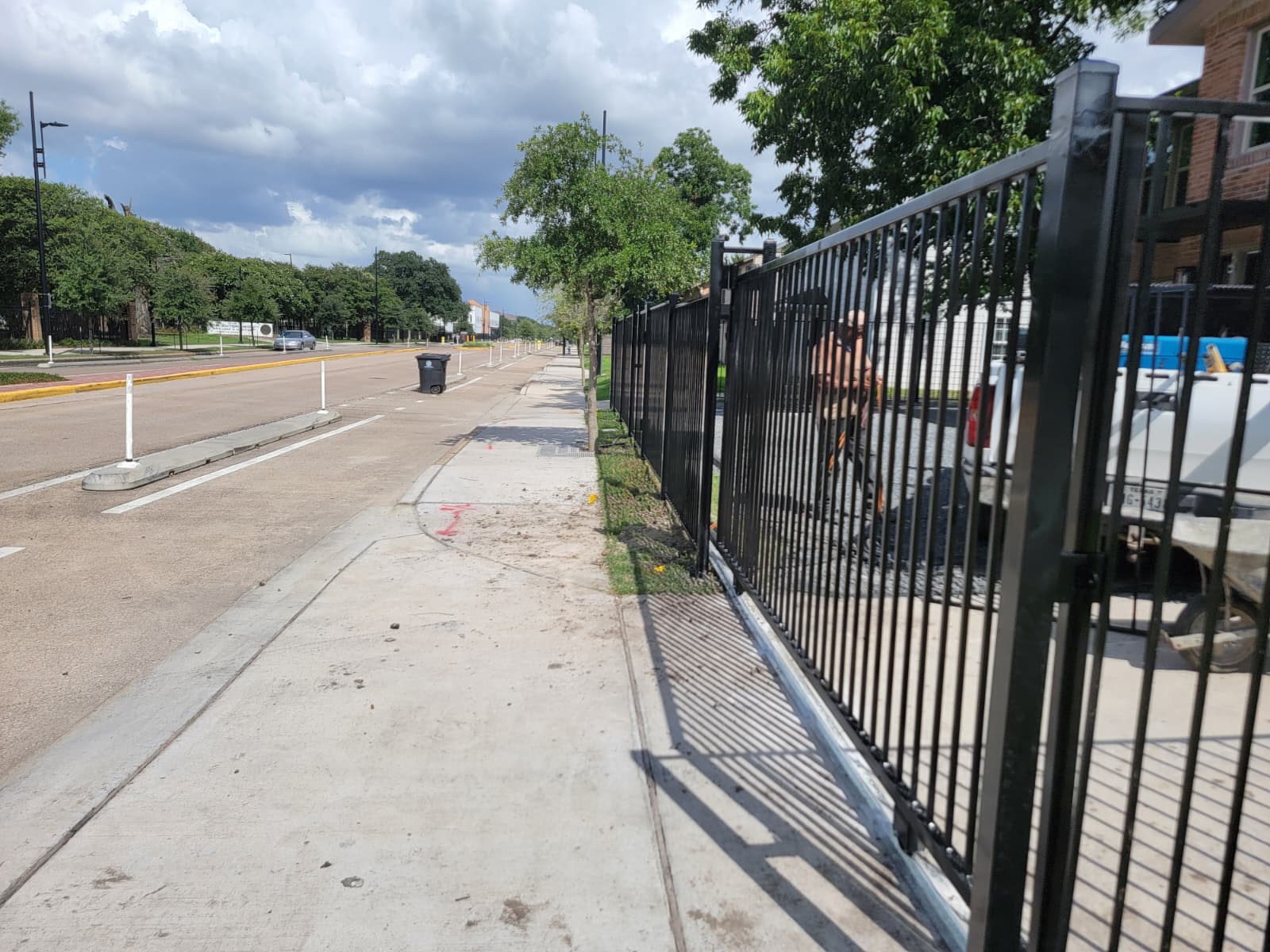
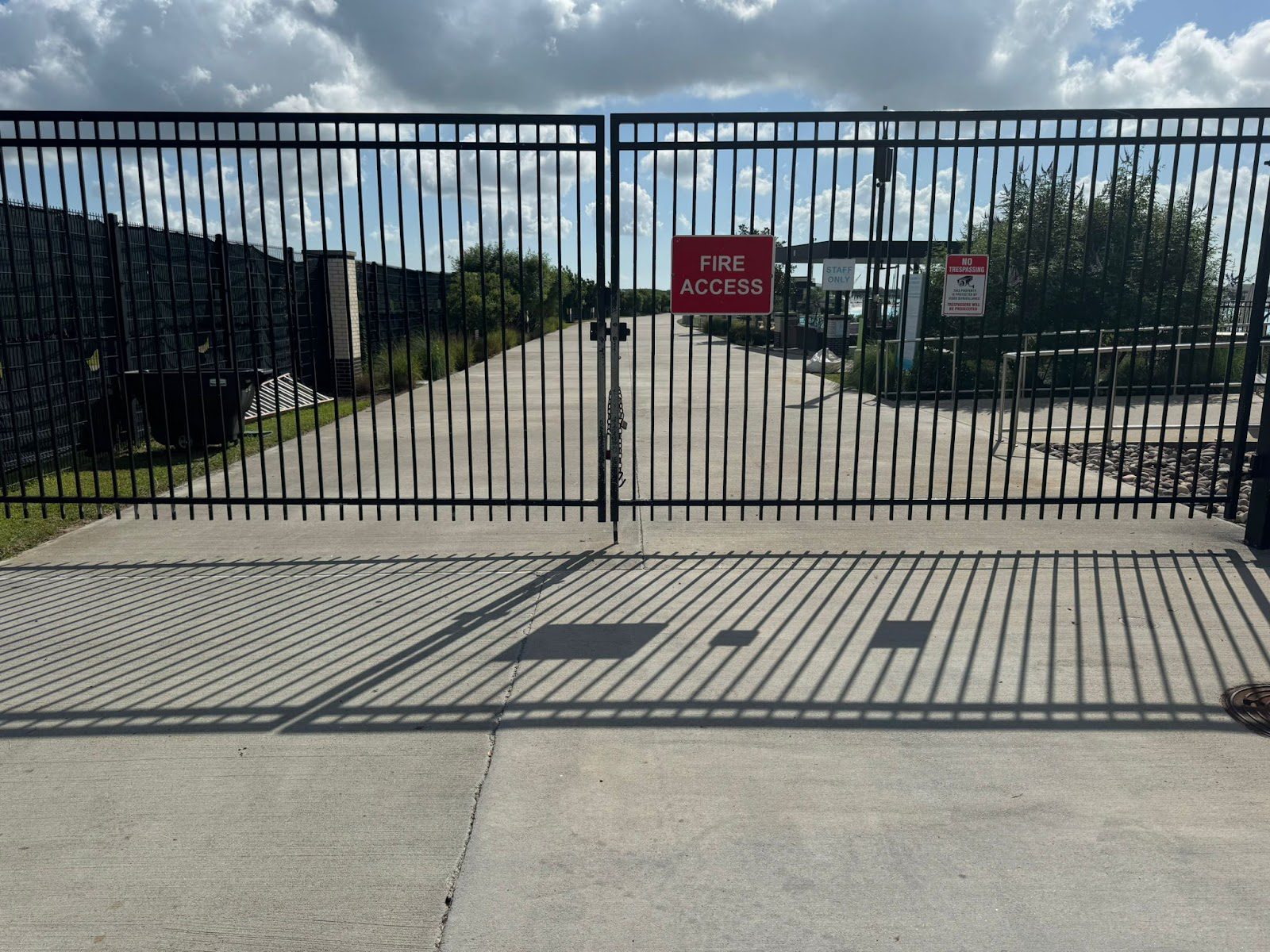
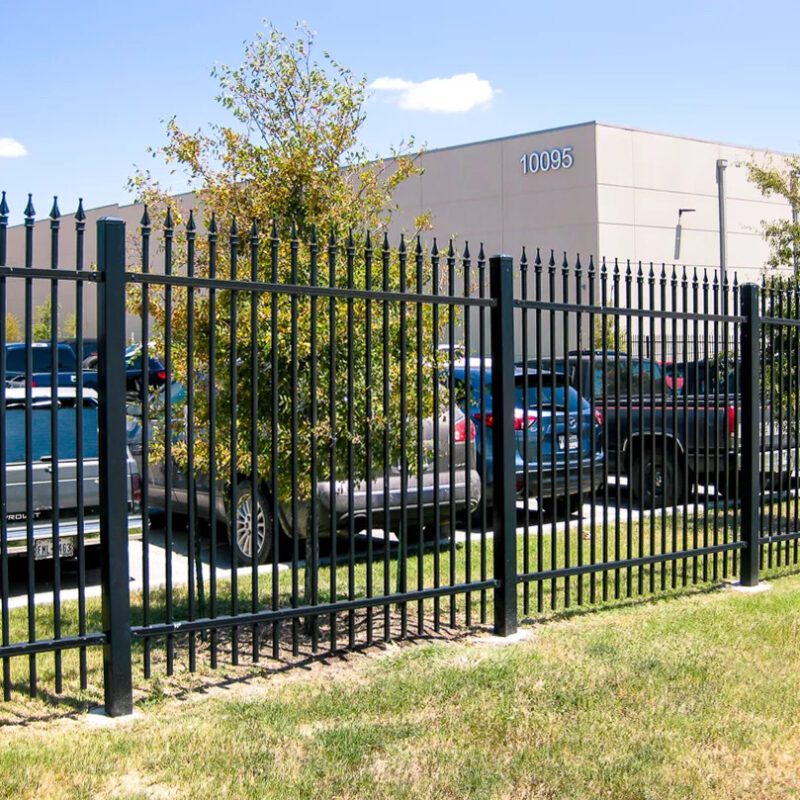
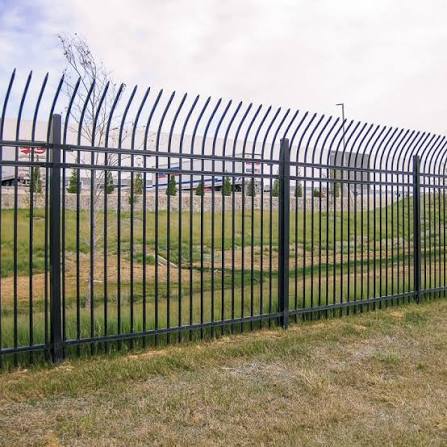
Real Mustang Fencing & Gates commercial installations around the Houston area — designed, fabricated, and installed by our own crews.
Watch: Community Perimeter, Entrance & Gate Installs
HOA Corridors We Cover
Our shop sits at 13004 Murphy Rd in Stafford, which puts most of Greater Houston’s master-planned and HOA-managed corridors within an easy drive — we take on community work up to roughly 50 miles out:
Fort Bend & Southwest
Stafford, Sugar Land, Missouri City, Richmond, Rosenberg, Fulshear
West & Northwest
Katy, Cypress, Tomball
North & Northeast
Spring, The Woodlands, Kingwood
Southeast
Pearland, Friendswood, League City
Plus neighborhoods across Houston proper — whether your community sits inside the Loop or out past the Grand Parkway, we can walk it.
How do you keep community fencing consistent across phases installed years apart?
We document a written fence specification — material, height, gauge, color, post spacing, and finish — that your board and ACC adopt as the official community standard. Because the standard is on file, a phase installed three years later matches the original: same steel profile, same powder-coat color, same detailing. That documentation also lets future phases and homeowner installs be held to one benchmark.
Can you provide the documentation our board and ACC need to approve the project?
Yes. You receive a documented fence specification and an itemized, zone-by-zone proposal designed to attach to a board motion and pass ACC review. We cross-check the proposed height, material, and setback against your CCRs and architectural guidelines and flag anything that may need a variance, so the board can vote with confidence.
We can’t fund a full perimeter replacement in one year. Can the project be phased?
Almost every community project we do is phased. We break perimeter and replacement work into logical phases — by street, section, or amenity — so each phase fits a single reserve cycle. The goal is to keep the work inside routine reserve contributions and reduce the odds of a homeowner-facing special assessment, prioritizing the most visible and most deteriorated runs first.
What fence material makes the best community standard?
For the community’s signature look, powder-coated ornamental steel is the most common choice — it holds color, resists the rust and fading that make older communities look neglected, and reads as an intentional architectural standard. For boundary, detention, and sport-court areas we use color-coated chain link or welded mesh so functional runs still coordinate with the standard.
Can you replace inconsistent, individually-installed fencing with one approved standard?
Yes, and it is one of the most common projects boards bring us. As a community ages it often ends up with a patchwork of homeowner-era styles, heights, and colors. We phase a replacement so the community converges on a single approved standard over time, starting with the most visible and most deteriorated runs to protect property values.
Do you serve communities across the whole Houston area?
Yes — Houston and the surrounding suburbs within roughly a 50-mile reach, including community submarkets like Sugar Land, Katy, Pearland, Missouri City, Stafford, Cypress, Spring, and The Woodlands. Because we are local, the contractor who documents your community standard is still here to help with the phases that follow.
Give Your Community One Standard to Stand Behind
From a single entrance monument to a full multi-phase perimeter, Mustang Fencing & Gates documents the standard, phases the budget to your reserves, and installs it to match — backed by 650+ Google reviews from across the Houston area.
Get Your Free Community Fencing Estimate
Mustang Fencing & Gates · 13004 Murphy Rd #222, Stafford, TX 77477 · (346) 639-4333
Call (346) 639-4333