



Houston Residential Fencing
Chain-Link Fences in Houston: Costs, Gauges & What Actually Lasts Here
Chain-link is the most affordable way to fence a Houston yard, but the coating, the gauge, and how the posts are set decide whether it lasts 5 years or 25. Here’s what actually holds up in our clay, humidity, and storm winds.
Chain-link gets dismissed as “just the cheap option,” but for a huge number of Houston homeowners it’s the smartest one: it secures a large back yard, contains dogs, defines a property line, and lets you keep an eye on the pool or garden, all for a fraction of what wood, vinyl, or iron costs. The catch is that chain-link is a metal fence in one of the most corrosive, ground-moving climates in the country. Between Gulf Coast humidity, expansive “gumbo” clay that swells and shrinks with every drought-then-downpour cycle, and hurricane-season wind loads, the difference between a fence that stays tight and one that sags, rusts, and leans comes down to a few choices most bargain bids get wrong. This guide walks through galvanized versus vinyl-coated, gauge and mesh, security and pet containment, the privacy-slat option, and how the costs compare for the Houston market.
Why Houston is uniquely hard on fences
Humidity & rain
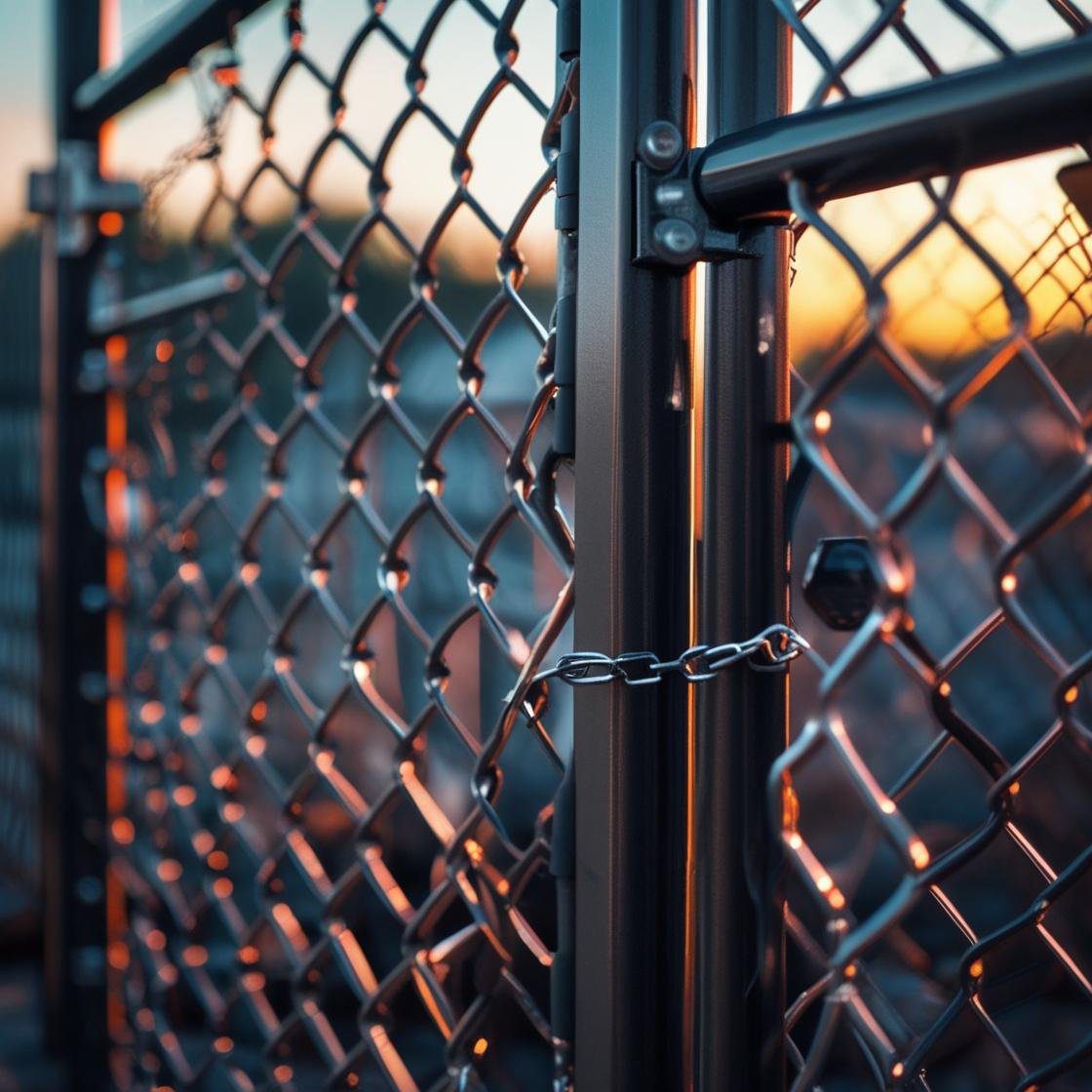
Bare or thinly coated steel rusts fast in our salt-tinged Gulf air and near-constant moisture. Hot-dip galvanized framework, quality galvanized or coated fittings, and vinyl coating are what keep a chain-link fence from bleeding rust down its posts within a few seasons.
Clay soil movement
Houston’s gumbo clay expands when wet and contracts when dry, heaving posts up and shoving them out of plumb. Chain-link relies on tension: if terminal and corner posts aren’t set deep in concrete, the whole line goes slack and wavy.
Storm & hurricane wind
Open mesh is chain-link’s quiet advantage: storm wind passes straight through instead of pushing on a solid wall. Add privacy slats, though, and the mesh starts acting like a sail, so posts, footings, and tension have to be sized for the extra load.
Galvanized, vinyl-coated & slatted: how the options compare
Most residential chain-link in Houston uses 2″ mesh with an 11 or 11.5-gauge wire, which is plenty for pets and property lines. Step up to 9-gauge (and heavier posts) for large dogs, security, or taller runs; true commercial and industrial jobs often go to 6-gauge on thicker framework. The bigger visible choice is the finish. Here’s how the common options stack up.
| Option | Look | Maintenance | Relative cost | Best for |
|---|---|---|---|---|
| Galvanized (silver) | Bright, utilitarian metallic | Very low; hose off occasionally | $ | Budget security, back & side yards, dog runs |
| Vinyl-coated (black or green) | Sleeker; visually “disappears” into landscaping | Very low | $$ | Curb appeal, pool & garden sightlines |
| With privacy slats | Semi-private, solid color | Low; check slats occasionally | $$ | Added privacy without the cost of a wood fence |
| Heavy-gauge / commercial grade | Taller, industrial, robust | Very low | $$$ | Security, large dogs, commercial & property perimeters |
On the residential-versus-commercial question: the components are the same family, but commercial-grade fence uses heavier gauge wire, larger-diameter posts, and taller heights, often with a top rail or barbed arm on true security jobs. For a home, that level is usually overkill, though if you have a determined large dog or want a genuine security barrier, borrowing a step up in gauge is money well spent. If you manage a business or industrial property, start with our commercial chain-link fence page or browse the full commercial fencing lineup.
What chain-link fences cost in Houston
Chain-link is the most affordable fence we install, but the spread is real: coating, gauge, height, gates, and slats all move the number. The bars below are general planning ranges for the Houston market, not a quote. Every yard is different, and the cheapest bid is rarely the best value. Shallow posts and thin, poorly coated wire are exactly what fail first in our soil and humidity.
Want a real number for your yard? We measure, walk the fence line with you, and put the price in writing. No pressure, no surprises.
Installation details that decide whether it lasts
- Posts set for gumbo clay. Terminal, corner, and gate posts carry all the tension. They need to be larger and set deep in real concrete footings, not the shallow line-post depth cheap crews use everywhere. This is what keeps the fence tight when the clay heaves.
- Drainage & rust control. Galvanized or vinyl-coated framework, plus keeping the bottom of the mesh above standing water and grading so runoff drains away. Sitting moisture is what corrodes bottom rails and fittings first in our humidity.
- Wind & tension done right. Proper tension bands, tension wire or a bottom rail, and a taut top rail so the fabric doesn’t billow in storm wind. If you add privacy slats, the posts and footings must be upsized for the extra wind load they create.
- Coated hardware throughout. Gulf humidity eats cheap fasteners. Tension bands, rail ends, ties, caps, and hinges should all be galvanized or coated so the fence doesn’t fail at its connections while the fabric still looks fine.
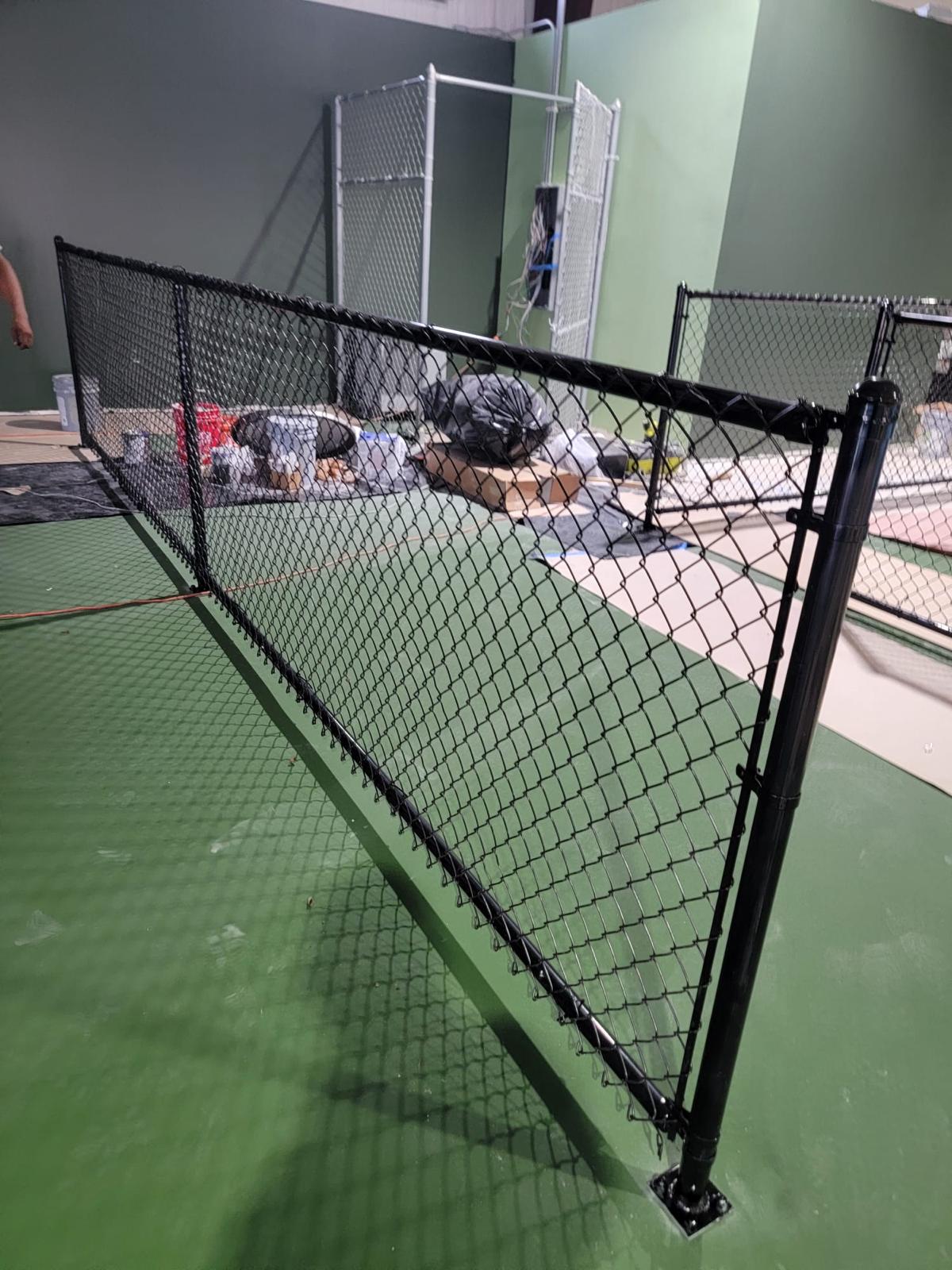
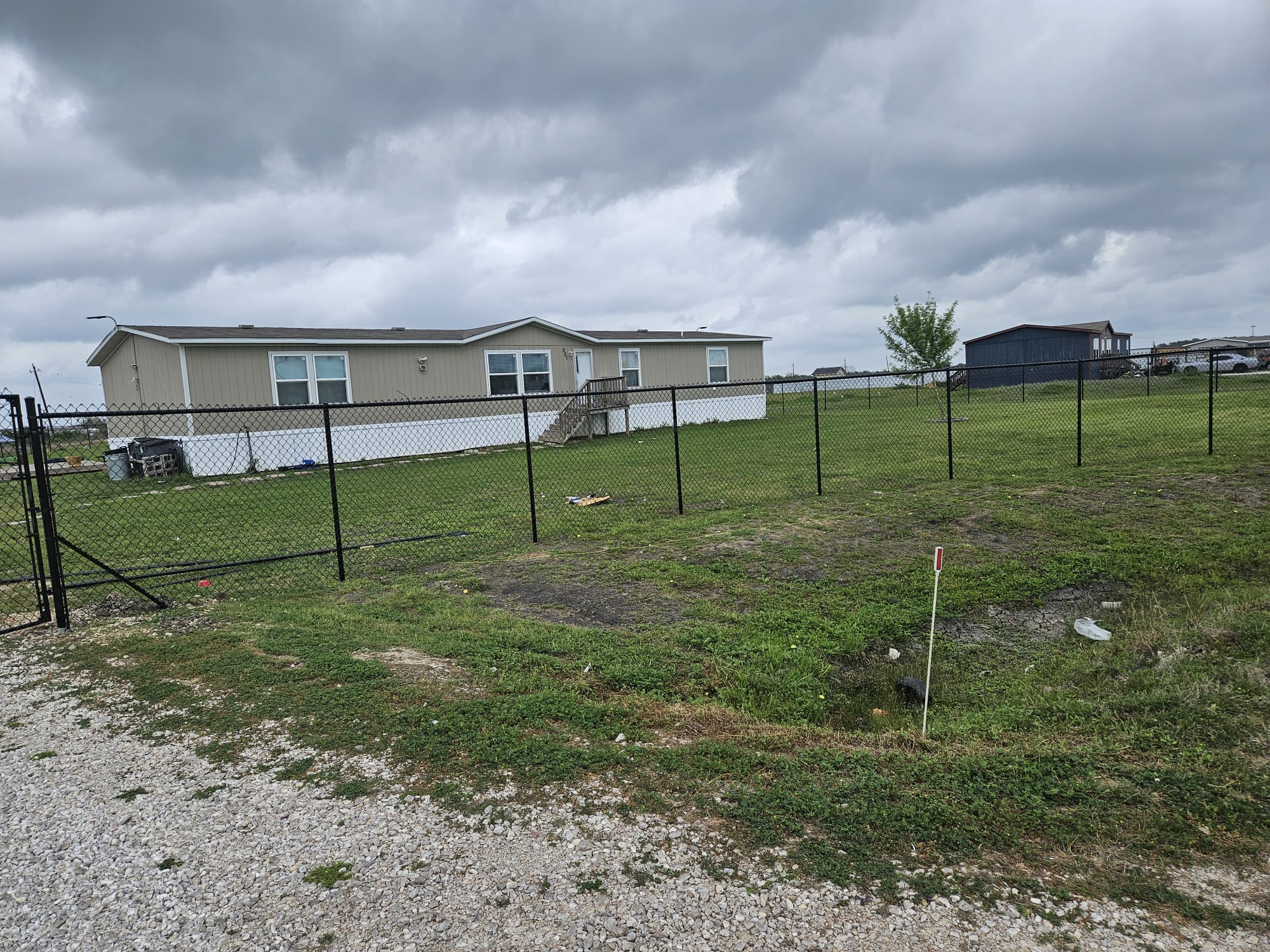
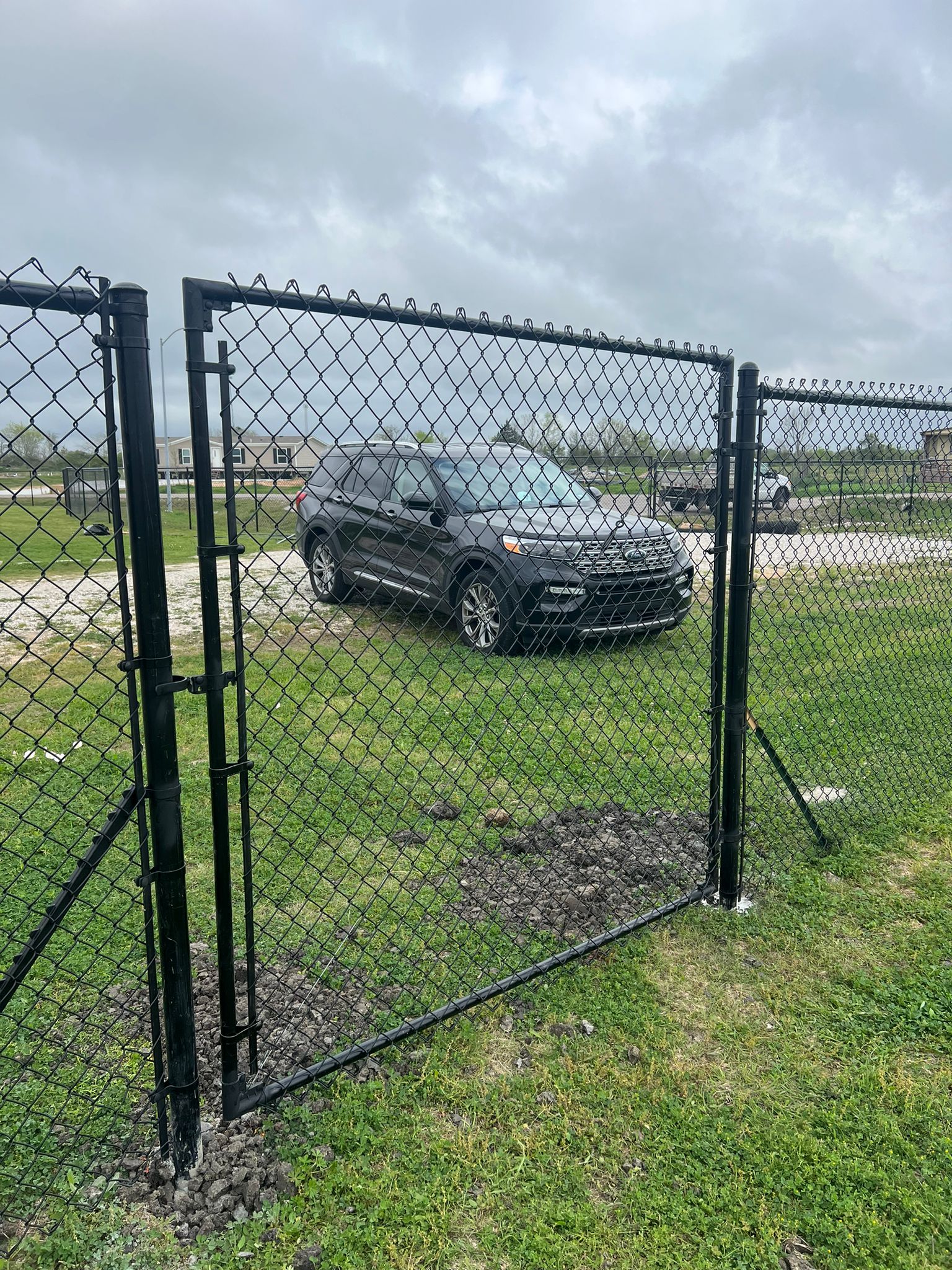
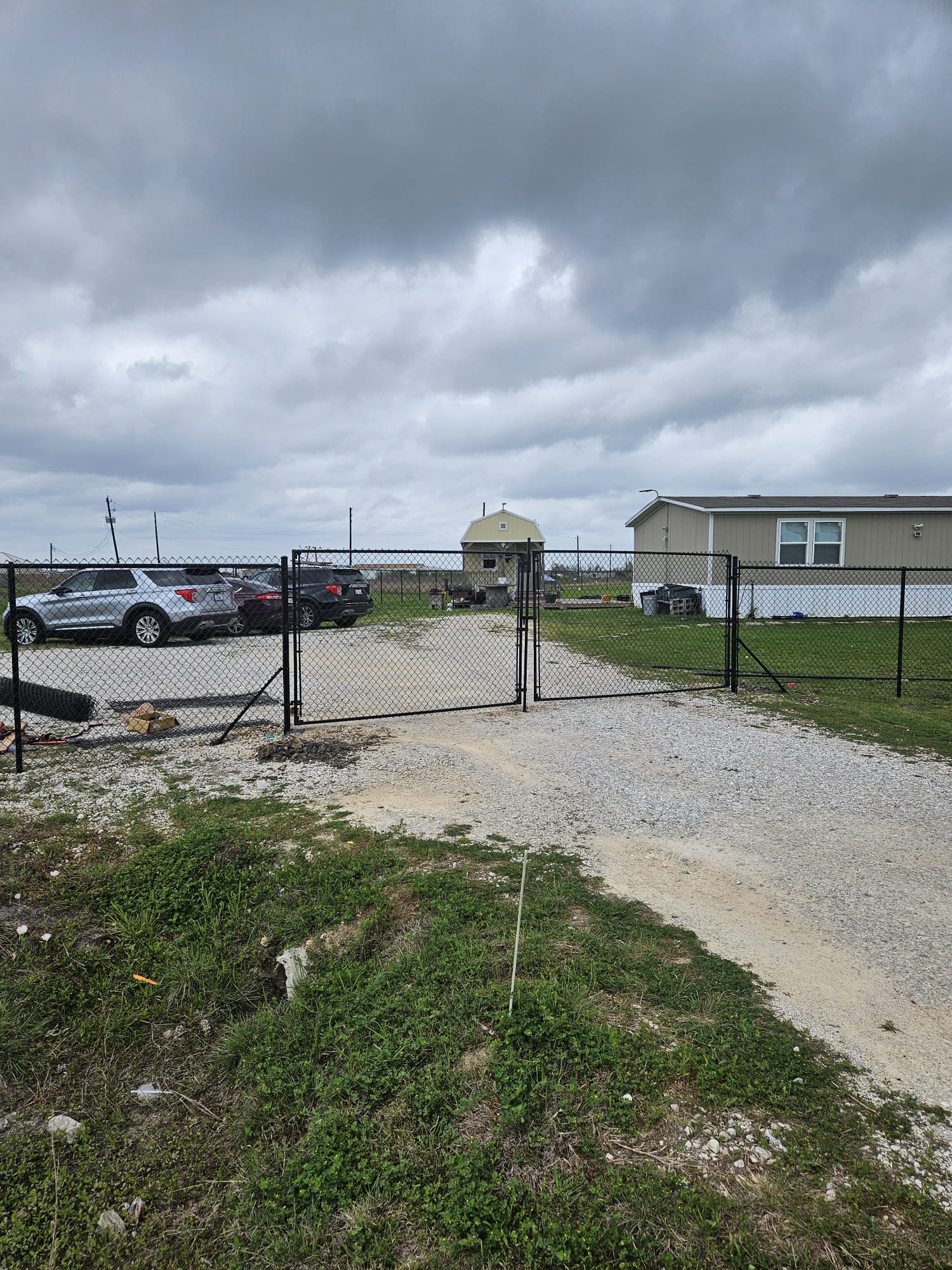
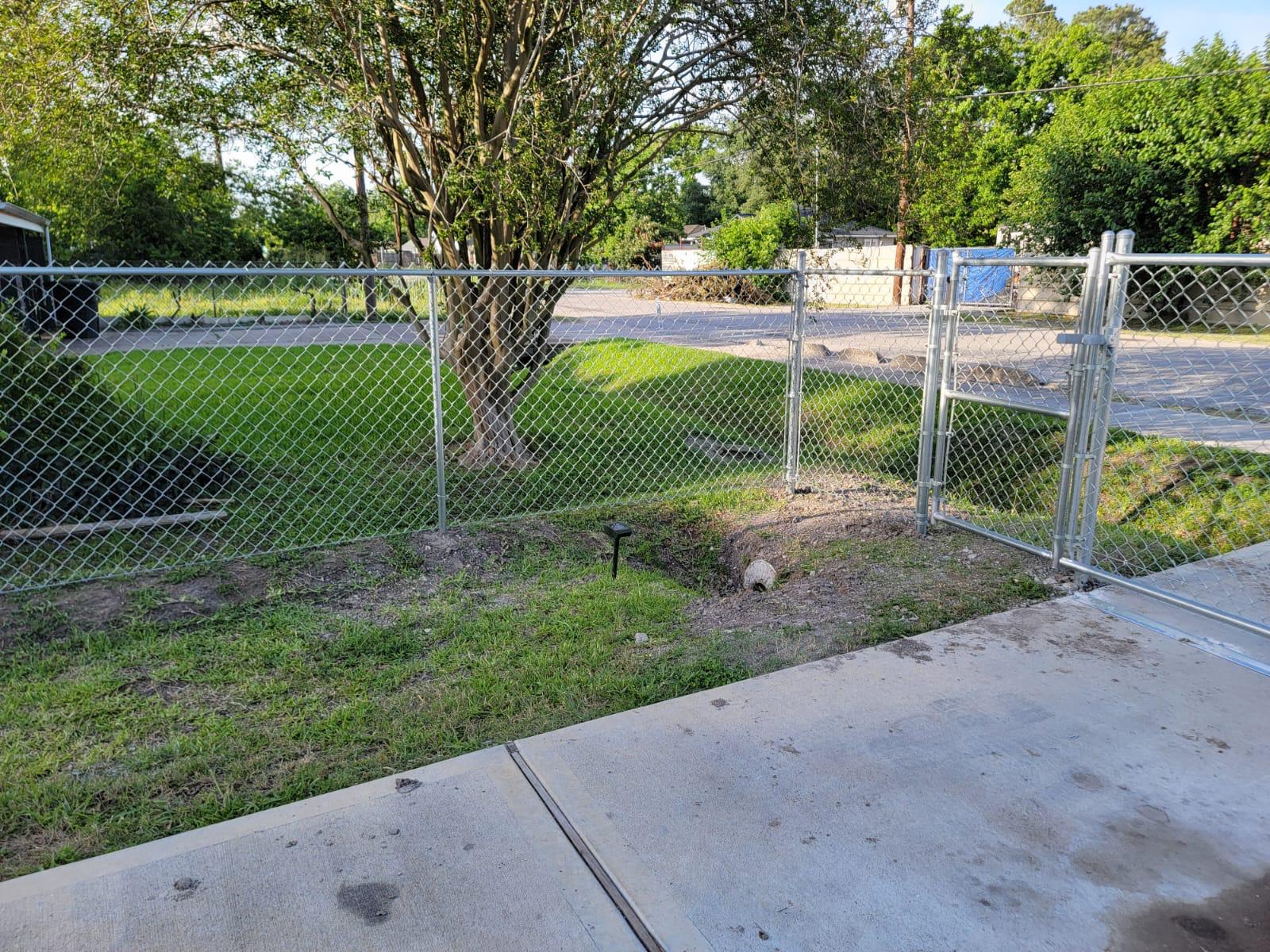
Chain-link fences we’ve installed around Houston
Keeping it looking good
Chain-link is about as low-maintenance as fencing gets, which is a big part of its appeal in a climate this demanding. Rinse it down a couple of times a year to clear pollen, mud splash, and grime, and keep vines and heavy shrubs from trapping constant moisture against the metal. On galvanized fence, touch up any scratched or rusting spots with a zinc-rich cold-galvanizing spray before they spread; on vinyl-coated fence, inspect for nicks in the coating where bare steel could start to corrode. Check the tension and gate hardware once a year, since a hinge or latch can drift out of adjustment after enough wet-dry clay cycles, and the fence will keep doing its job for decades.
Watch our crews at work
See how we build chain-link that stands up to Houston clay and Gulf humidity, from post setting to the final gate swing.
Frequently asked questions
Galvanized or vinyl-coated — which is better for Houston?
Both use galvanized steel underneath, so both resist our humidity well. Galvanized (the classic silver) is the most affordable and nearly maintenance-free. Vinyl-coated adds a bonded PVC layer, usually black or green, that looks sleeker, visually recedes into landscaping, and gives the steel an extra barrier against moisture. If budget is the priority, galvanized is the workhorse; if you want it to look better and blend in around a pool or garden, vinyl-coated is worth the modest upcharge.
Will chain-link actually contain my dog?
For most dogs, yes. It’s one of the most popular pet-containment fences for good reason. For large, strong, or determined dogs, step up to a heavier 9-gauge fabric with sturdier posts, choose an appropriate height, and add a bottom rail or tension wire so a digger can’t push under it. We’ll spec the gauge and height to your specific dog rather than defaulting to the lightest option.
Can I get privacy with a chain-link fence?
To a degree, yes. Privacy slats woven vertically through the mesh, available in several colors, give you partial screening at a fraction of a wood or vinyl fence’s cost. They won’t match the full seclusion of a solid fence, and because they catch wind, the fence needs heavier posts and footings to handle Houston storms. It’s a great middle ground when you want more screening without stepping up to a full privacy fence.
Can chain-link fencing look more decorative than a plain galvanized fence?
Yes. Vinyl-coated chain-link (typically black or green) reads far less industrial than bare galvanized wire and blends into landscaping better, and privacy slats can be woven in solid colors or alternating patterns for both a decorative look and added screening. Matching ornamental post caps and a swing or slide gate finished in the same coating are the most common ways to dress up a chain-link installation.
Planning a chain-link fence in Houston?
Get an honest recommendation on coating, gauge, and height for your yard, built to hold up in our clay and humidity, with a free, written, no-pressure estimate.
Get Your Free Chain-Link Fence Estimate
Mustang Fencing & Gates · 13004 Murphy Rd #222, Stafford, TX 77477 · (346) 639-4333
