



Residential Fencing · Pool Enclosures
Aluminum vs. Wrought Iron vs. Steel: Which Is Best for Houston Pool Fencing?
All three meet the same open-sightline appeal around a pool — the real differences are weight, maintenance, and how each holds up in Gulf Coast humidity.
Choosing between aluminum, wrought iron, and steel for Houston pool fencing usually comes down to three practical factors: how much upkeep you’re willing to do, how the fence needs to look, and your budget. All three are open, see-through materials that let you supervise the pool from the house — unlike a solid privacy fence — but they’re not interchangeable once you look past the surface finish.
Aluminum
Never rusts (no ferrous metal to corrode), lighter weight, and lower long-term maintenance. Slightly less rigid than steel or true wrought iron, but the most common pool-fence upgrade from wood for exactly that reason.
Wrought Iron
The heaviest, most rigid option and the classic ornamental look. Needs a real hot-dip-galvanized-then-powder-coated finish to resist Houston’s humidity — paint alone rusts within a few seasons.
Steel
Similar strength profile to iron at a typically lower cost, with the same galvanizing-then-powder-coating requirement for rust resistance. Often the practical middle ground between aluminum’s low upkeep and iron’s heft.
Typical Pool Fence Code Requirements
- Minimum height around 48 inches — commonly required by pool-barrier codes, though exact figures vary by jurisdiction.
- Gaps no larger than about 4 inches — picket spacing small enough that a young child can’t squeeze through.
- No climbable horizontal rails in the lower ~45 inches — horizontal members low on the fence can act as a foothold.
- Self-closing, self-latching gate hardware — with the latch mounted high, typically around 54 inches, on the pool side of the gate.
These are typical pool-barrier code patterns, not a specific cited ordinance — always confirm the exact current requirements with your local building department before finalizing a design. Harris County’s current pool-barrier requirements are published by Harris County.
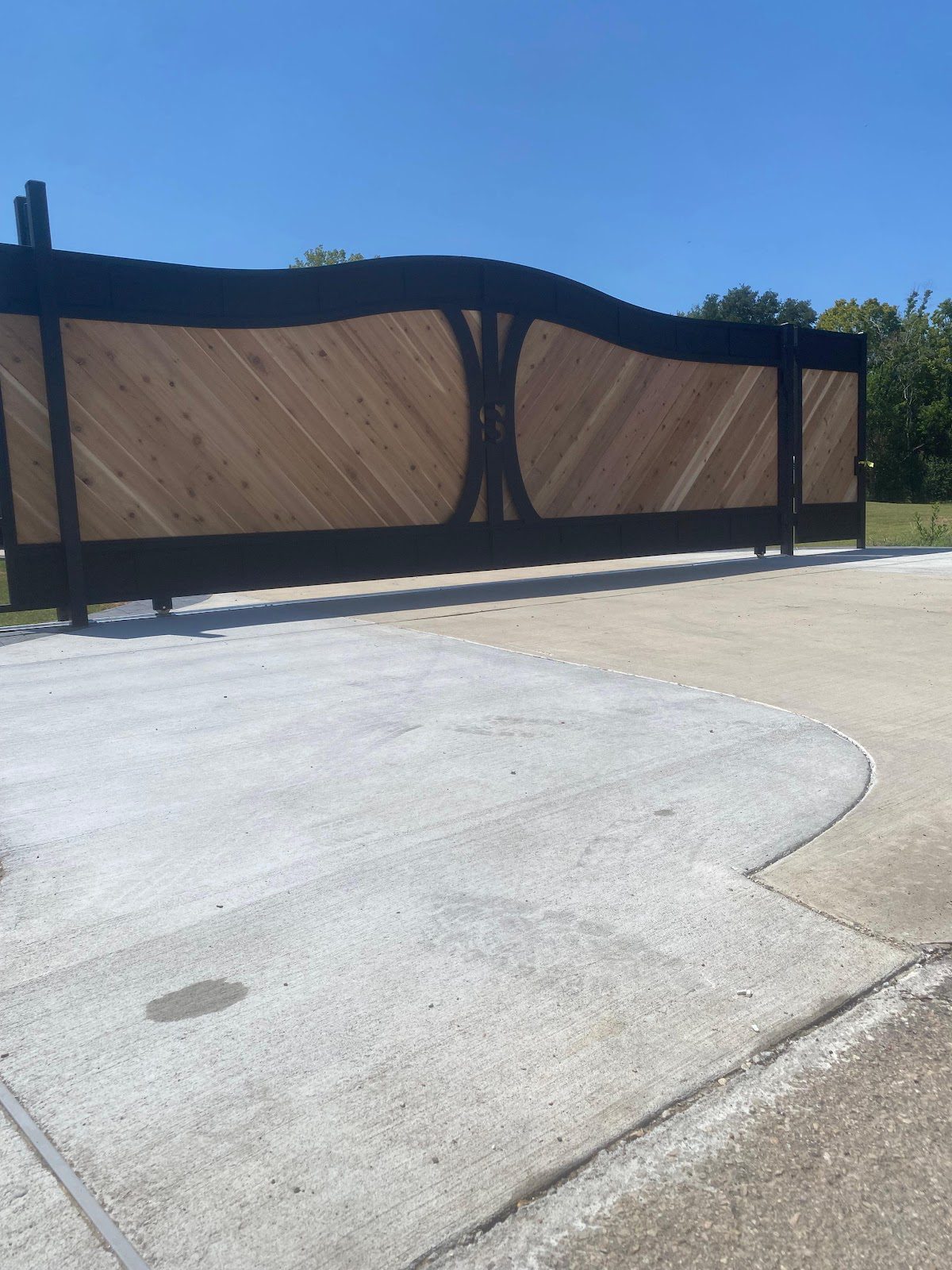
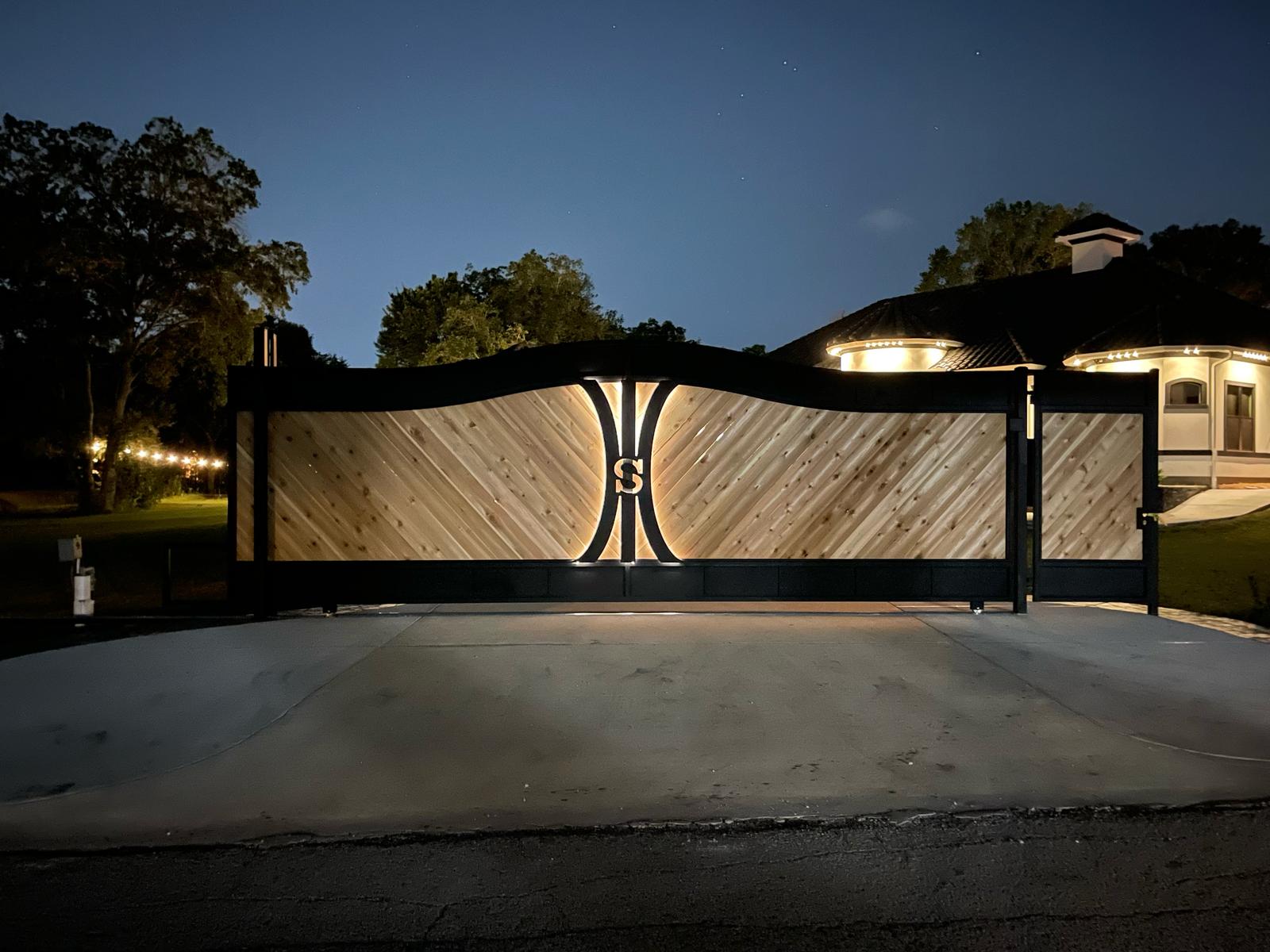
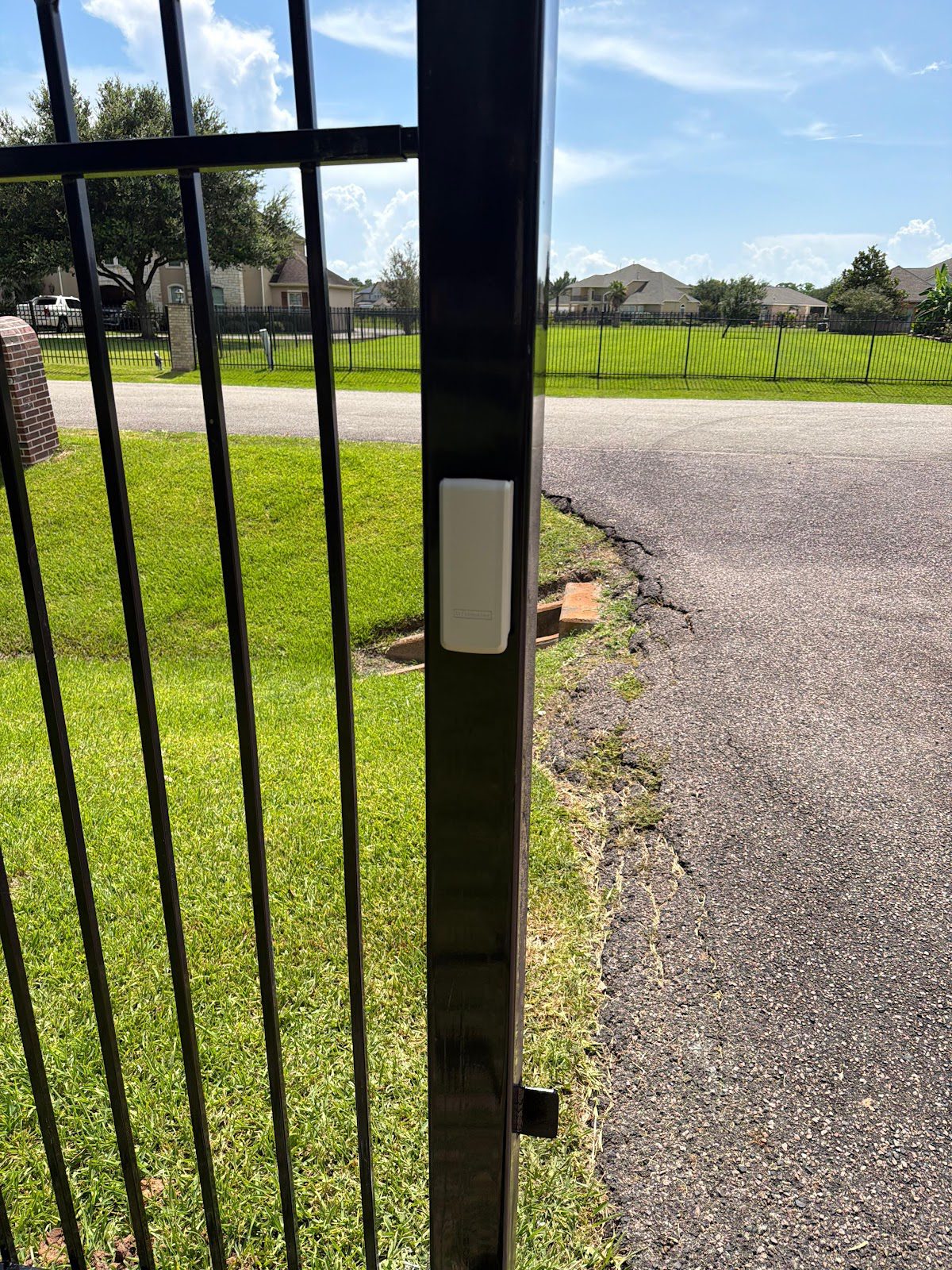
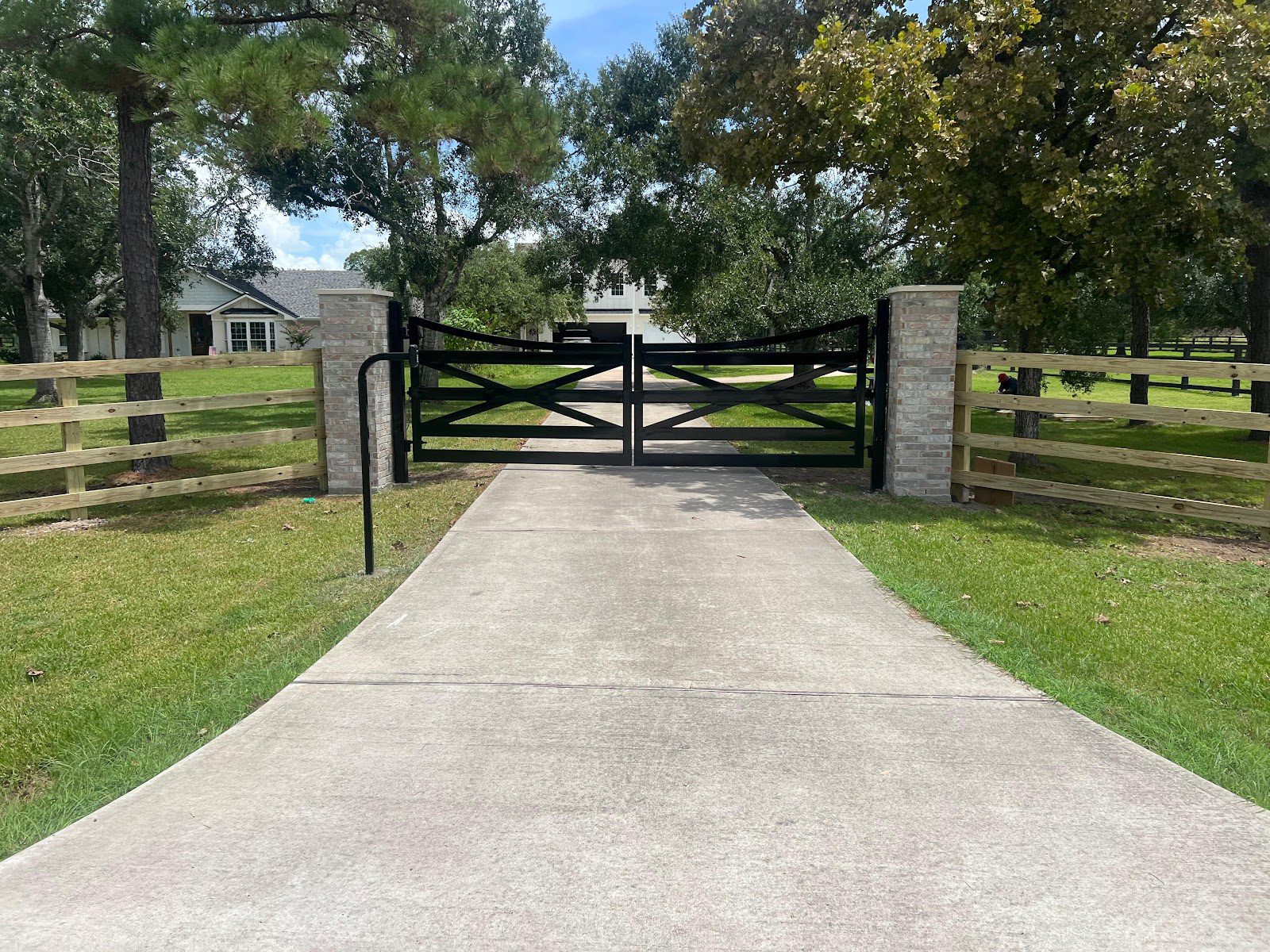
Watch: Real Gate & Fence Installations
Pool Fencing FAQ
Aluminum vs. wrought iron vs. steel: which is best for Houston pool fencing?
Aluminum never rusts and needs the least maintenance, wrought iron is the heaviest and most classic ornamental option, and steel typically splits the difference on cost and weight. All three are open, see-through materials that work well for pool enclosures — the right pick depends on your maintenance tolerance, look, and budget.
What does pool fence code typically require?
Common patterns include a minimum height around 48 inches, gaps no larger than about 4 inches, no climbable horizontal rails in the lower part of the fence, and self-closing, self-latching gate hardware with the latch mounted high on the pool side. Always confirm the exact current requirements with your local building department.
Does iron or steel pool fencing rust in Houston’s humidity?
Bare metal will, but a properly built fence is hot-dip galvanized and then powder-coated, which keeps the metal from seeing air and moisture unless the coating gets scratched. Keep any scratches touched up and it holds up for decades.
What Houston Homeowners Say
★★★★★ 4.9 rating · 1,150+ reviews across Google, Facebook, Thumbtack & Angi · Read our Google reviews
Ready to compare pool fencing options for your yard?
Mustang Fencing & Gates installs aluminum, wrought iron, and steel pool enclosures across the Greater Houston area — honest advice on which fits your pool and budget.
Get Your Free Pool Fence Estimate
Mustang Fencing & Gates · 13004 Murphy Rd #222, Stafford, TX 77477 · (346) 639-4333
